Maps, Metaphors, and Meaning
The reading I acted on
For a stretch of months I treated a single sentence as a compass. The sentence came from the Bashar material — follow your highest excitement — and the first time I tried it, something lifted. I chose the option that carried the most energy among the safe ones in front of me, acted within my capacity, and released my grip on the result. Small feedback arrived the same day. The sentence felt less like a doctrine and more like a permission.
Then the permission began to eat the room. A decision my body was quietly refusing — a commitment I had outgrown, a conversation I did not want to keep avoiding — I re-read as “excitement,” because some part of it still carried charge. A burst of attention that was really novelty or fear of missing out I treated as guidance. The sentence that had loosened me was now overriding the slower signal underneath it: the tiredness, the dread, the small honest “no” I kept stepping over.
That is when the question of this chapter arrived. A useful map had become the only reality in the room. Usefulness had become equivalence. And I could not have seen it from inside the map, because the map had been built to feel like clarity.
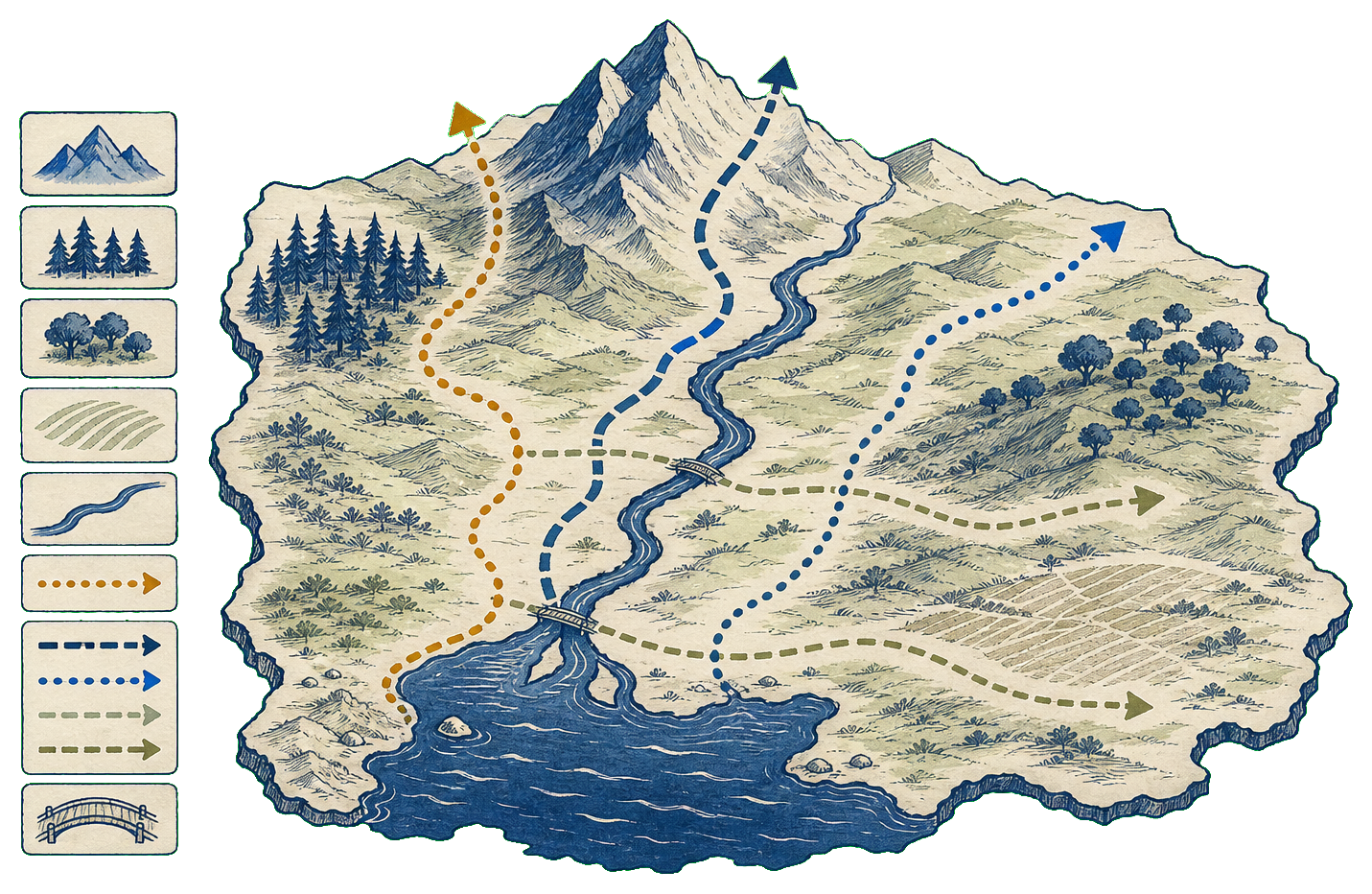
Several maps, one table
Interpretive pluralism is the practice of allowing several maps to enter while preserving their provenance, claim class, and limits. It differs from believing everything. It also differs from flattening every source into psychology. A clinical model, a sacred text, a channeled statement, a personal experience, and a commercial framework do not become the same kind of evidence because they share a pattern. A theological text may be asking a genuinely theological question, and a symbol may carry a surplus of meaning that an operational translation does not exhaust.
The task is to keep the layers available without letting one borrow unearned authority from another — and without me collapsing them into the language I already trust. The Bashar sentence stayed useful the moment I stopped asking it to be a cosmology. It could orient me among safe, responsible options when the relevant facts were otherwise similar, and it could not override consent, duty, evidence, health, or material risk. That boundary is where the map ended and the terrain began.
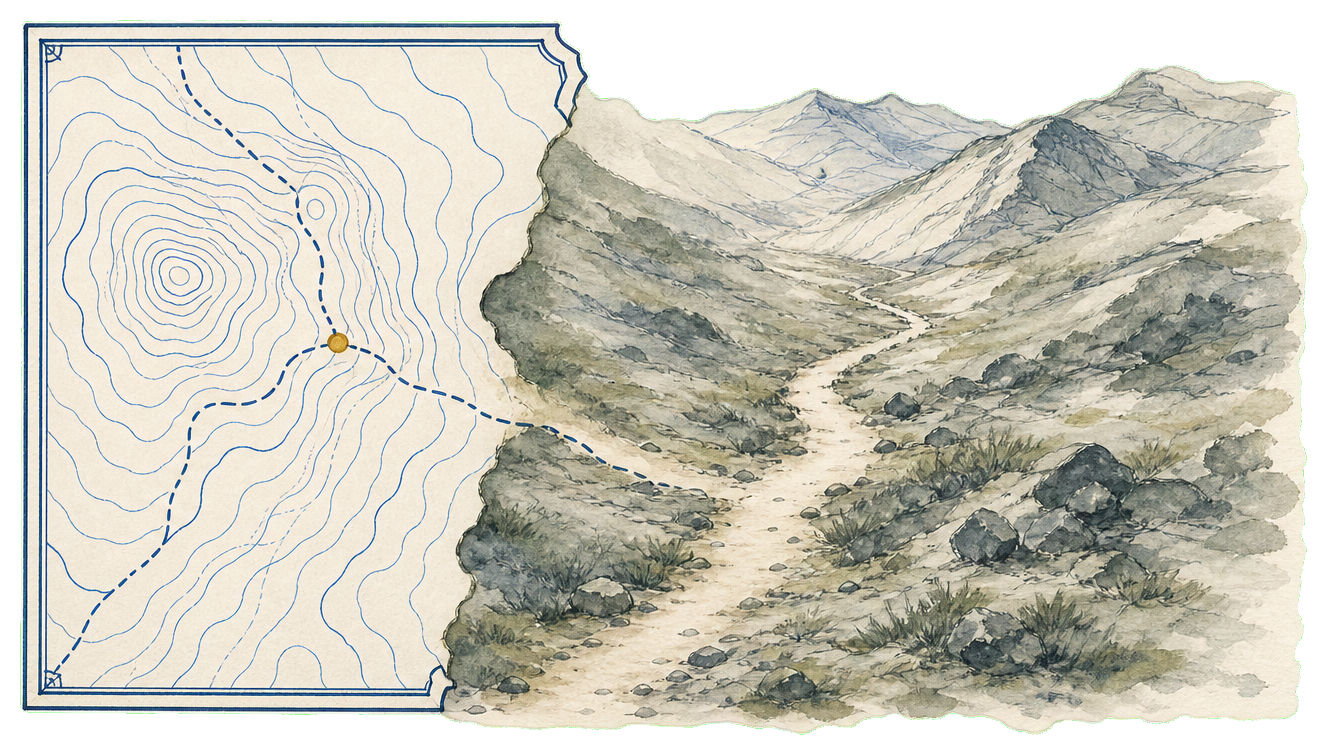
The source card
Before a concept enters my vocabulary, I build a source card for it. The card asks eight things, in order: the source that presents it; its form — research, scripture, commentary, channeled material, memoir, teaching, myth, model, or personal note; the claim the source actually makes; its context — to whom, when, and for what purpose; my derivation — the mechanism or meaning I extract; an alternative reading; the use it supports; and its limit, what it cannot establish.
This card prevents anonymous authority. A broad appeal to spiritual tradition becomes a named teaching from a named text or community. A broad appeal to science becomes a defined claim with a source and scope. “My intuition says” remains personal interpretation. The card also protects credit: an idea does not become mine because I translated it into VVViva language.
For the Bashar sentence, the source claim is that excitement is presented as an organizing signal and a guidance mechanism. Its form is channeled metaphysical teaching. My derived mechanism is to identify the available option carrying energy and curiosity, act within capacity, and release control of the result. The ordinary-life parallel is that interest can support attention and persistence, and small action produces feedback. The competing interpretation — the one that cost me those months — is that excitement can also reflect novelty, impulsivity, avoidance, mania, status desire, or learned reward. Its use is selecting among safe, responsible options when the facts are similar. Its limit is that the metaphysical claim itself remains unverified here, and the heuristic cannot be allowed to override the slower signals it was never built to weigh.
Metaphor reveals by excluding
A metaphor makes one relationship vivid by borrowing structure from another domain, and its honesty lives in what it leaves out. The car makes authorship visible through driver and passengers, and it quietly excludes roads, public policy, disability, fuel, shared ownership, and involuntary dependency. The mirror makes self-reflection visible and can erase another person’s independent reality. The field makes relationship and influence visible and can suggest a physical energy mechanism where only social interaction or a felt atmosphere is meant. The code makes repeatable rules and updates visible and can make human beings sound programmable. The frequency makes qualities of state and fit vivid and can borrow the prestige of physical measurement without specifying a measurable quantity. The portal makes transition vivid and can imply supernatural access or guaranteed transformation.
A responsible metaphor names both the relationship it reveals and the features it excludes — and releases its grip the moment the image begins to control interpretation rather than illuminate it.
The ordinary-language return, and the sacred remainder
Every VVViva term should survive translation into ordinary language. “The field changed” may mean the emotional atmosphere shifted after someone named a conflict. “My frequency rose” may mean energy, hope, attention, or perceived capacity increased. “The timeline changed” may mean a different action produced a new sequence of consequences. “The portal opened” may mean a ritual marked permission for a transition. “I decoded the pattern” may mean I identified a cue, prediction, response, and outcome. Translation does not prove the metaphysical version is false; it shows what the term contributes in observable life. If nothing survives the translation, the term may function mainly as identity, atmosphere, or authority.
But ordinary-language translation is a safety tool, not a complete account of every spiritual experience, and a responsible pluralism must say so plainly. When a person says prayer connects them with God, translating the practice into attention, hope, self-regulation, or community may describe some effects. It does not preserve the claimed relationship with a divine other, and a believer may reasonably experience the translation as incomplete. The sacred remainder is what a worldview claims or experiences beyond the operational translation, and it should be named rather than smuggled into fact or erased by reduction.
So for each concept, I write two lines. The ordinary function — what happens in observable or experiential terms. And the sacred remainder — what the tradition or person believes exceeds that function. For confession, the ordinary function is that it names conduct, creates witness, and may support accountability; the sacred remainder, in a Christian sacramental understanding, is relationship with God, sin, grace, and absolution through a specific ecclesial form. The two lines preserve dialogue without pretending equivalence. If I erase the second line I am doing reduction, not pluralism; if I treat it as established fact I am doing the same borrowing the first chapter of this book warned against.
The glitter test
Spiritual language can become attractive because it offers identity, certainty, status, belonging, beauty, or distance from pain. I call this the glitter test: after the language is removed, what behavior and relationship remain? A person may speak about sovereignty while punishing disagreement. A teacher may promise remembrance while creating dependency. A community may celebrate unity while excluding testimony about harm. A practitioner may describe abundance while hiding debt or unpaid labor. The test does not ask whether the language is beautiful. It asks what is promised, what behavior occurs, who can disagree, how money moves, what happens after harm, whether a participant can leave without threat or spiritual diagnosis, and whether the practice increases ordinary function and agency. Beautiful language can accompany ethical practice. Beauty simply cannot certify it.
A framework need not be supernatural to fall into capture. The same architecture — every objection confirms it, every failed prediction is reframed, the leader cannot be corrected, exit costs belonging — can run through a clinical model, a business methodology, a relationship, or a self-improvement system. The exit test travels with the glitter test: if you cannot leave the framework without losing meaning, community, or safety, that is not proof the framework is true. It is a sign the framework has been doing the work a family once did, and it deserves the same scrutiny we gave the inherited room in the first chapter.
Several meanings at once
A text or event can hold several kinds of meaning at once, and pluralism requires keeping them distinct rather than letting the most flattering one absorb the rest. Historical meaning concerns what happened, when, and under which conditions. Authorial meaning concerns what a creator may have intended, where evidence exists. Traditional meaning concerns how a community has interpreted and practiced the material. Personal meaning concerns what the material evokes in a reader’s life. Symbolic meaning concerns the patterns an image can carry beyond one event. Operational meaning concerns the action or mechanism derived from it.
These owners can disagree, and the disagreement is the point. A personal interpretation does not rewrite a source’s history. A traditional reading does not exhaust a text. An operational use does not prove authorial intention. The next chapter reads scripture this way — as layered architecture in which text, historical scholarship, theological tradition, personal symbolism, and a derived mechanism are allowed to sit beside each other without collapsing into one voice.
Respect without agreement
Pluralism also needs a way to handle traditions a reader does not believe, and respect is not the same as assent. Respect can mean accurate representation, historical care, recognition of internal diversity, and refusal to use another community’s sacred language as decoration. It does not require agreeing with the claim.
Disagreement needs the same specificity. “Religion is control” erases practices of care, resistance, art, ethics, and liberation. “All religions point to the same truth” erases real theological differences. “Ancient people understood consciousness better” romanticizes history and hides evidence. A cleaner comparison identifies the actual proposition. Traditions may differ on selfhood, divinity, salvation, suffering, revelation, authority, death, ritual, and ethical obligation, and similar symbols can carry genuinely different structures. Comparative language should clarify those differences before it draws parallels.
The economics of meaning, and the roles it sells
Meaning is also sold. Courses, retreats, readings, subscriptions, sacred objects, certifications, communities, books, and platforms create exchanges around spiritual and psychological need, and payment is not by itself evidence of corruption — teachers and creators need livelihood. The exchange needs legibility. When an offer combines high price, urgent fear, an unverifiable mechanism, a guaranteed result, and leader immunity, the glitter test and the exit test both fail before the purchase is made. What is promised, and is it factual, experiential, symbolic, or metaphysical? Are the testimonials representative or selected? Is there recurring payment or escalation? Does the product create dependence on further interpretation? Can a participant obtain a refund, complain, or leave? Are vulnerable people being targeted with certainty? Reality Clarity applies at the checkout.
Frameworks do more than explain; they offer roles. Awakened person, empath, survivor, chosen one, rational skeptic, healer, operator, starseed, secure partner, high performer, heretic — a role can create language and community, and it can also direct perception toward the evidence that preserves membership. Can an empath misread a room? Can an awakened person need treatment? Can a skeptic experience awe? Can a healer cause harm? Can a survivor enjoy dependence? Can an operator fail to understand the system? An identity with no permitted counterexample becomes a cage. My own terms require this test: “Prism Walker” cannot mean superior to committed believers. “True Blue” cannot certify an interpretation. “Field Operator” cannot claim invisible control of a room. The terms must return to behaviors another person can question.
Permission slips without dependency
In the Bashar material, practices and objects are sometimes described as permission slips: forms that allow a person to access a state or capacity already available to them. As metaphysics the term belongs to that source; as a derived mechanism it can describe how expectation, attention, ritual, environment, and learned association make an action easier. A song can help someone enter a writing state. A ring can remind someone of a promise. A meditation cushion can cue stillness. A checklist can reduce uncertainty. None of these objects needs to contain an invisible force for the relationship to work.
Dependency becomes visible when access seems impossible without the object, teacher, payment, or ritual; when the person’s confidence shrinks; or when missing the practice produces catastrophic interpretation. The line between a tool that supports capacity and a tool that owns it is the same line this chapter has been drawing all along.
Borrowed forms, borrowed authority
A symbol or practice can travel far from its community of origin, and travel creates exchange, adaptation, misunderstanding, commercialization, and sometimes appropriation. Before incorporating a tradition I want to know whether the practice is public, restricted, initiatory, sacred, or community-owned; who taught it and under which conditions; what history of suppression or extraction surrounds it; whether attribution is present; whether money is being made and who benefits; which elements are being changed; and whether the new use misrepresents the original community. The answer is not always “do not use.” It may be to learn from an authorized teacher, cite the source, compensate labor, preserve restrictions, choose a generic alternative, or describe the adaptation honestly. Spiritual pluralism does not turn every sacred form into raw material for personal branding.
Online culture accelerates the same borrowing and hides its seam. A sacred verse, a clinical term, a physics metaphor, a channeled quote, and a marketing promise can meet in one short video, their original contexts dissolved, and repetition can make the combined vocabulary feel established. Terms such as trauma, quantum, nervous system, energy, attachment, dimension, and manifestation can then perform authority without carrying definitions or evidence. The defense is not to reserve language for experts; it is to prevent expertise from being simulated by vocabulary. Which field owns this technical term? Is the term being used consistently with that field? Is it explicitly marked as metaphor? What evidence would a specialist require? Does the speaker benefit from the ambiguity?
When maps contradict
A reader can hold several maps around one question without forcing them into a single total system, and the holding gets harder the moment the maps disagree. One tradition may describe a permanent soul; another may reject permanent selfhood. One may understand God as personal and distinct; another may describe ultimate reality as nondual. One framework may treat desire as guidance; another may treat craving as the source of suffering. People often collect frameworks until these contradictions disappear into broad language — “everything is energy” can make incompatible claims sound unified. The honest move is to keep a contradiction visible: write the exact proposition from each source, define the key terms in context, ask whether the claims can both be true, record the practical effect of each, and leave the unresolved difference on the page rather than dissolving it with a sentence claiming all traditions secretly agree.
The same holding works for a single life. A relationship ends after two people discover they want incompatible futures. A psychological map may focus on attachment, grief, and coping; a relational map on agreements, reciprocity, and the other person’s independent choice; a spiritual map on meaning and ritual; a material map on housing, money, legal ties, and care responsibilities. Each map sees something, and each can overreach — psychology can diagnose ordinary difference, spirituality can invent agreement beyond consent, material planning can leave meaning untouched. A constellation permits combination: use the relational map to respect the ending, the material map to separate lives, the psychological map to support grief, a spiritual ritual if it helps release the bond, and keep “soul contract” as a private interpretation rather than a claim the other person agreed before birth. The maps do not need to agree about ultimate cause in order to coordinate care. The result is a constellation rather than a pyramid — orientation without placing one framework above every domain.
What the map cannot do for me
These disciplines do not by themselves protect a person from the larger movement this book traces — the one where a private response becomes a shared story, a norm, a role, an enforced rule, and a lived condition that trains the next body to enter it (Chapter 8 follows that chain in full). The source card, the glitter test, and the sacred-remainder method are personal instruments. They cannot, on their own, correct an institution that has decided what counts as evidence, or recover a community whose exit has become too costly to attempt. They name the seam. Other work — organized, structural, collective — has to be done at that seam.
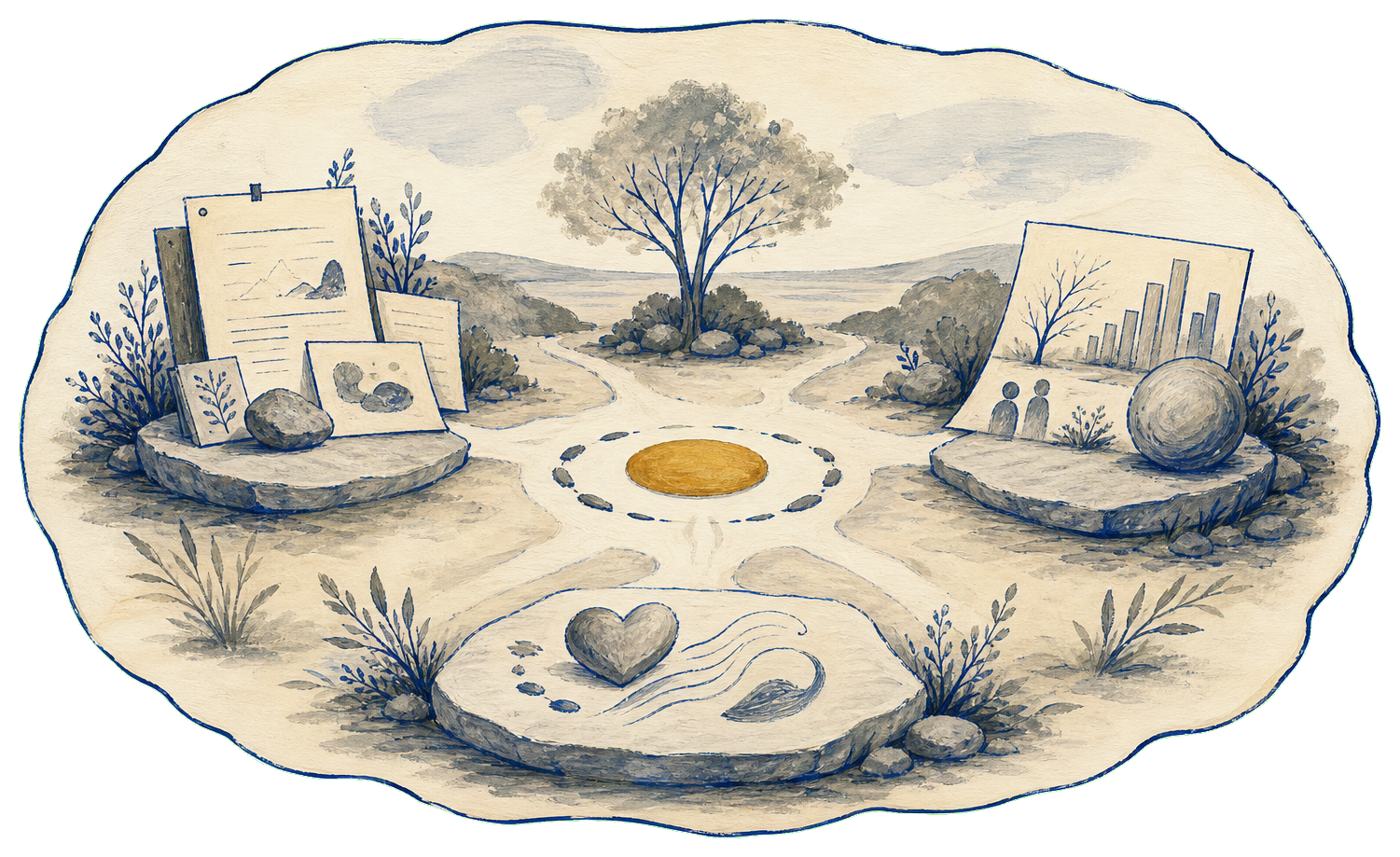
The table again
As the author, I cannot outsource judgment to “the corpus.” Source material does not assemble itself into this architecture. I selected, translated, named, and connected it, and those decisions belong to me. AI assisted with organization and revision; it cannot accept responsibility for a false claim, a distorted tradition, or a reader harmed by overconfident guidance. That responsibility is mine, and it is why VVViva distinguishes its authored concepts from inherited ones. Reality Clarity, the operating sequence, the open map, and the particular synthesis in this volume are my constructions even when they draw from many sources. Bashar, scripture, psychological language, and other traditions keep their names.
On my table, a psychological diagram can sit beside Genesis, a Bashar transcript, a business operating model, a meditation journal, and a sketch of a prism, and none of them needs to be wrong for any of the others to be useful. The sentence I once mistook for a compass still sits there too. I still reach for it, sometimes. The difference is that I now reach for it the way I reach for one map among several — for the relationship it illuminates, with its edge in view, knowing that the terrain was here before the map arrived and will still be here when I set the map down.