A Living Human Practice
The morning the loop wakes up
It is six minutes before the alarm. A message has already arrived, and before I have moved I am answering it — composing the reply in the dark, softening the tone, deciding how useful I will make myself before I know whether I want to be awake. By the time my feet touch the floor the day has already become a verdict about my character. The late invoice, the awkward call I avoided yesterday, the sentence I cannot finish: each one arrives as evidence for a single prosecution, and I am both the defendant and the prosecutor, still in my sleep clothes.
I learned to do this. The conditioned identity from Book I does not wait for a desk and a clear hour. It wakes with me. It shapes a protective response, the response becomes a pattern, the pattern produces an outcome, and the outcome seems to confirm the belief that started it. By breakfast the loop has run once. By the end of a normal day it has run a dozen times, and the day reads as destiny.
The question this chapter carries is the only one that breaks the loop without pretending to dissolve it: where, in an ordinary day, can a person place one revision so the loop runs through evidence instead of fear? The answer is not a method I arrived at. It is a small set of practices, designed for waking and eating and receiving a message and disagreeing and resting and closing the day, that give the loop somewhere to be observed and changed. Each one earns its place by a single test: does it increase my agency and my contact with what is actually happening, or does it add another layer of performance on top?
The same field contract governs every practice in this chapter. Each one states a purpose, names the situation in which it is useful, gives concrete steps, predicts a realistic effect, admits its limits, and carries a stop condition or a route to care. No practice promises calm, healing, insight, wealth, reconciliation, or spiritual advancement. A practice earns continued use only through observed benefit at an acceptable cost.

The morning coordinate
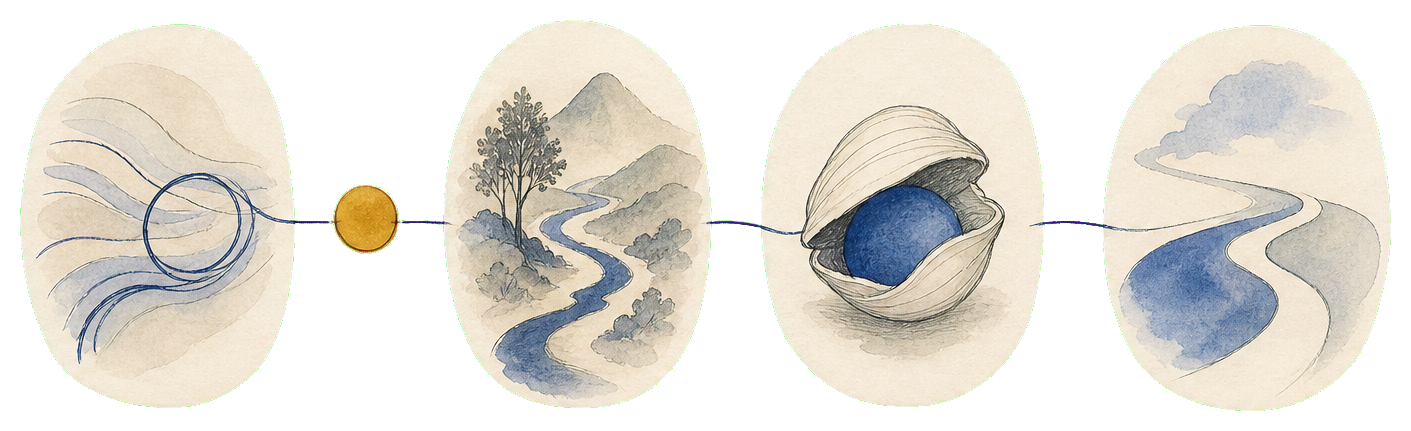
Before the day can become a verdict, it has to begin as a coordinate. The morning coordinate is the practice that interrupts the prosecution at its opening hour. It asks what is actually present — sleep, pain, mood, obligation — before the plan hardens into a story about who I am.
This morning the coordinate might read: “I slept poorly, my back hurts, and the invoice must be sent. I need food and a slower morning. I prefer to keep the creative session. I will send the invoice, shorten the session to thirty minutes, and move the optional call.” Notice what it does not say. It does not say “I am failing,” and it does not say “I should be able to do everything.” It separates capacity from verdict. Low energy becomes information about today, not a character judgment. A preference for ease does not erase the real obligation, and the obligation does not erase the person who has to meet it.
I use the morning coordinate every day that I can, not because it fixes the day but because it changes who begins it. Without it, I answer the dark-room message before I have decided whether I want to be useful. With it, the message waits while the day gets a coordinate first.
One loop, many stations
The morning coordinate is the first station, but the loop runs all day. Different moments need different revisions, and the practices below are the rest of the field. They share the same contract as the morning card — purpose, situation, steps, expected effect, limits, and a stop or route-to-care condition — and they are written here as an if-then map rather than a catalog to be walked. Find the moment where your loop currently has leverage, and run that one.
When interpretation outruns the facts — when one charged explanation has repeated itself into certainty — use the Claim Ledger from Chapter 9, in its two-minute form: the recordable event, my experience, my leading interpretation, another possible explanation, and the next evidence or action. It works on certainty in either direction. “This opportunity proves I am finally chosen” becomes: an invitation arrived, I feel excited and relieved, I interpret it as recognition, it may also reflect timing or fit or the inviter’s needs, and I will review the terms before agreeing. Consequential decisions deserve the full ledger from Chapter 9; do not pause for analysis when immediate safety or emergency action is required.
When activation fuses with an immediate story — a message, a memory, a sensation that demands a response this second — orient before interpreting. Look around and name the location and the date; find two colors, two shapes, and one sound; notice where the body is supported; describe one sensation; state the observable event; delay interpretation long enough to name two possibilities; then choose whether to act, ask, wait, or leave. External orientation is often safer than closing the eyes, and the practice permits neutral breathing rather than prescribing a breath. It may not reduce activation, and it does not establish safety — chest pain, severe breathing difficulty, fainting, current danger, trauma flooding, or symptoms outside your normal experience need appropriate medical or crisis support.
When a protective behavior will not stop — avoidance, overwork, appeasement, control, withdrawal, perfectionism — run a protection interview. Name the response without identity language, complete “This response predicts that…,” ask what immediate benefit it offers, ask what present evidence supports the prediction, identify the later cost, offer a smaller protective action, and record the result. The email rewritten for an hour is predicting humiliation after an error; its immediate benefit is control; the smaller protection is one checklist and one reread. Severe compulsions, substance dependence, trauma symptoms, self-harm risk, or danger from another person need qualified care and safety planning rather than this interview.
When a nonemergency request triggers automatic compliance or reflexive refusal, answer yes, no, or later. Repeat the request in your own words, identify the real deadline, check preference, obligation, capacity, consent, and consequence, then answer — yes, no, or “I will answer by…” — and communicate any conditions and follow through or renegotiate before the deadline. It also improves a yes: “I can review five pages by Friday” is more coherent than “I will help” when the scope is unknown. Coercive requests, threats, or dangerous retaliation call for a safety plan, not direct negotiation.
When a repeated behavior crosses an unspoken limit and communication is reasonably safe, rehearse the boundary. Write the observable trigger, write the action you will take, add a route back if appropriate, remove claims about the other person’s motive, say it aloud once, plan timing, location, and support, and enact it consistently. “If the conversation includes insults, I will end the call. I am open to trying again tomorrow.” A good sentence cannot make a person respect it, and enforcement may carry cost — violence, stalking, financial control, immigration risk, housing dependency, or child-safety concerns require specialized planning.
When preparation expands while feedback stays out of reach, run a work release loop. Name the user or reader, state the job this version must do, list the required safeguards and quality checks, define what can remain unfinished, release to the smallest useful audience, gather the response tied to the job, and revise, expand, or stop. The practice distinguishes a draft from a promise, and minimum versions remain responsible for safety, privacy, accessibility, law, and truthful representation; do not release consequential work when required review, consent, security, or professional verification is missing.
When numbers and labor stay invisible until they become urgent, review money and capacity — weekly for an active business, monthly for a stable household, adjusted to circumstance. Review balances, income, due dates, and obligations; compare planned and actual spending; identify unpaid or invisible labor; review upcoming capacity limits; choose one action — pay, invoice, reduce, renegotiate, save, seek advice, or ask for support; and set the next review. Shame will enter the review. Record it as experience, and keep the numbers visible beside it; shame does not improve arithmetic. Basic-needs crisis, predatory debt, financial abuse, or imminent legal action requires appropriate local assistance.
When eating becomes moral judgment instead of present information, run a meal check-in. Notice hunger, fullness, emotion, time, access, and practical need; choose from what is available; reduce one distraction if desired; notice taste, texture, and comfort; stop, continue, or add food based on present information; and leave moral judgment outside the record. Body cues can be affected by illness, medication, food insecurity, stress, and eating disorders, and no single meal settles a pattern. Skip the exercise if attention to food or body cues intensifies restriction, bingeing, purging, compulsive tracking, or eating-disorder distress, and seek qualified care.
When movement could support orientation, the walking coordinate gathers environmental information through one small transition: choose a familiar, accessible route or an indoor equivalent, name the starting location and intended return point, notice three stable features of the environment, let pace remain ordinary, state the event and the leading interpretation and one unknown, identify the next available action, and return or stop without extending the walk to force a state change. Walking does not prove safety, resolve trauma, or replace rest; seated movement, looking through a window, wheeling, or external orientation without movement can serve the same function. Stop for pain, dizziness, breathing difficulty, unsafe surroundings, disorientation, compulsive exercise, or distress that increases with movement, and use appropriate medical, mobility, safety, or mental-health support.
More practices do not necessarily produce more change. A crowded system can become another performance. Run one practice for a defined period, record a small outcome, and continue it only when the evidence supports the cost — fewer impulsive messages, clearer agreements, one completed draft, more accurate financial information, earlier recognition of overload, a repaired conversation. “I feel more spiritual” is too vague for a practice whose purpose is behavioral.
Running a practice as a small experiment
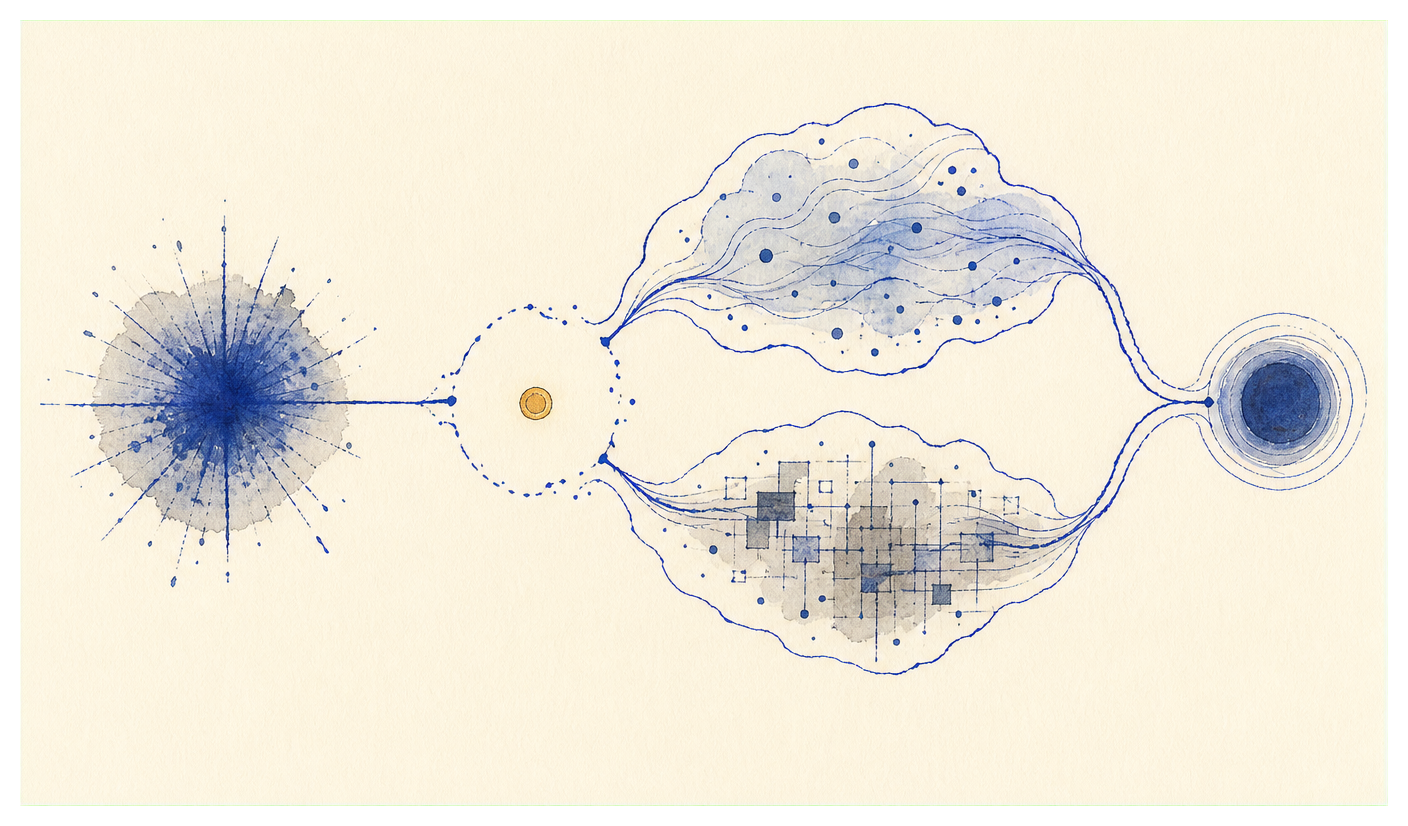
A practice is easier to evaluate when it has a baseline, a period, and an outcome. Suppose I choose yes, no, or later because automatic agreement creates resentment. For one week I record how many nonurgent requests receive an immediate answer, how many receive a bounded delay, and how often I later wish I had answered differently. At the end I review the pattern. The aim is learning, not self-surveillance — a handful of brief entries is enough, and I stop when tracking becomes more costly than the pattern.
The experiment itself has a small shape: the pattern as it currently happens, the practice and which condition it will change, the period of the test, the observable difference expected, the cost in time, discomfort, or risk the practice adds, and the review that decides whether to continue, adapt, replace, or stop. The outcome may challenge the original model. Perhaps resentment comes less from response speed than from unclear scope, and the next experiment addresses scope. Practices are allowed to fail; a failed practice may mean poor fit, insufficient dose, the wrong mechanism, an unsafe context, an inaccessible form, or an unrealistic expectation. “You did not believe enough” is not an acceptable universal explanation.
Some capacities develop only in relationship. A boundary rehearsal needs a listener, repair needs another center of experience, and collective choice needs decision rules, so a person can practice alone and still lose access under social pressure. A practice partnership works when both people freely agree to a bounded, consensual setting: define the practice and duration, agree on confidentiality and its safety limits, state the kind of feedback wanted, permit pause or refusal, practice once, close with each person’s next action, and review whether the arrangement should continue. Keep the session short enough that friendship does not silently become therapy. End it when safety, coercion, severe distress, or dependency appears, and use qualified support; peers should not diagnose, process trauma beyond capacity, manage crisis alone, or claim professional authority.
Evaluating a helper or method
The same standard that governs a practice governs the people and methods I bring into my life. Professional titles, spiritual authority, testimonials, charisma, and polished language all influence trust, so I ask the operating questions before I hand over access: What is the training, license, or source of authority? Which problems and populations is the method designed for? What evidence supports it, and what are the uncertainties? What risks, alternatives, costs, and expected duration should I know? How is consent maintained? How can I complain, stop, obtain records, or receive a referral? What happens when the method does not work? Answers differ across doctors, therapists, lawyers, coaches, clergy, peer groups, and traditional practitioners, and the relevant standards differ with them, but the common principle is scope and correction. A testimonial can reveal experience and cannot establish typical effect. A method that explains every nonresponse as resistance protects itself from evidence. A helper who isolates clients from outside support gains dangerous authority.
When practice becomes avoidance
A person can journal instead of speaking, regulate instead of leaving, meditate instead of grieving, track instead of deciding, and rehearse instead of acting. The signs are practical rather than mystical: the practice expands while the target behavior does not occur, a perfect internal state becomes the condition for any action, every outcome generates another preparatory ritual, direct evidence is repeatedly postponed, and responsibility drifts onto the tool or the teacher. The correction is an actuator deadline — after ten minutes of preparation I will send the scoped draft, after this rehearsal I will request the meeting, after reviewing the ledger I will make the medical appointment. Preparation earns its place by supporting contact with life.
Some problems require more than an individual exercise. A retaliation policy needs organizational change. Abuse needs safety resources and accountability. Addiction may need medical treatment and sustained recovery support. Severe trauma symptoms need qualified assessment. Poverty needs resources and structural action. Discrimination needs institutional correction. A medical symptom needs medical evaluation. Self-practice can support a person inside those efforts; it cannot replace them. Asking for help is an authored action, whether the source is a friend, clinician, doctor, lawyer, union, advocate, financial counselor, spiritual community, public service, or emergency resource. Reality Clarity applies to helpers too: what do they claim, what evidence supports the method, what authority do they hold, how can a person stop, and what happens after harm?
The evening correction
At the end of the day the loop tries to run one last time, and review becomes prosecution. The evening correction refuses that prosecution. It converts the day’s outcome into a single update.
The unknown line is the one that closes the day. It prevents the mind from extending the review until every uncertainty has been assigned a cause. Tonight the divergence might be the call I avoided, the condition might be the poor sleep and the back that ached all afternoon, the responsibility might be mine to schedule it, and the circumstance might be a week of overlapping deadlines. One repair, one unknown, and the day ends as a coordinate instead of a verdict.
Whether the map can travel without the book
Book I should now be usable without Book II, and a real pattern is the only honest test. Can I write the conditioned identity? Can I identify the protective response? Can I show the repeated behavior and its outcome? Can I separate sensation from interpretation? Can I include the other person’s consent and agency? Can I identify the system level that maintains the pattern? Can I classify the central claim? Can I choose one proportionate action and observe its effect? If I can, the map has transferred. If I cannot, I return to the missing layer, and the answer may be “unknown,” “I lack authority,” or “this requires qualified support” — those are successful coordinates too.
The morning, revised
The next morning the alarm goes off and the message is there again, still early, still demanding. This time the loop reaches for its first prosecution, and finds a coordinate in the way. I sleep poorly. My back hurts. The invoice must be sent. I need food, and I would like to keep the creative session. I send the invoice, shorten the session, and move the optional call — and the dark-room reply, the one I used to compose before my feet touched the floor, waits while I eat.
A living human practice does not remove the need for uncertainty. It gives uncertainty a place beside action. I can notice a signal without obeying it, honor protection without preserving its old job, love without granting unlimited access, treat the body as evidence without making it an oracle, and make meaning without assigning cosmic purpose to harm. The loop still wakes with me. It no longer wakes to a day that has already been decided.