The Life Written Before You Could Choose
The causal question
Why can an action feel compulsory even when its cost is obvious? A person may answer every message at once, smooth a conflict they did not create, overprepare a reversible task, hide a need, or become useful before deciding whether they want to participate. The resulting guilt, relief, shame, pride, or exhaustion is important information. It does not explain the response by itself.
This chapter examines one possible mechanism: repeated messages and consequences can teach a person which responses preserve belonging, reduce danger, earn attention, or avoid punishment. I call this conditioning. It is one part of a life, alongside temperament, disability, culture, material conditions, opportunity, chance, and the choices of other people. It is neither a diagnosis nor a complete account of identity.
The central question is practical: which learned rule is operating here, what does it protect, and what present evidence would justify revising it?

The conditioning loop
instruction -> predicted consequence -> protective response -> repeated outcome -> reinforced identity
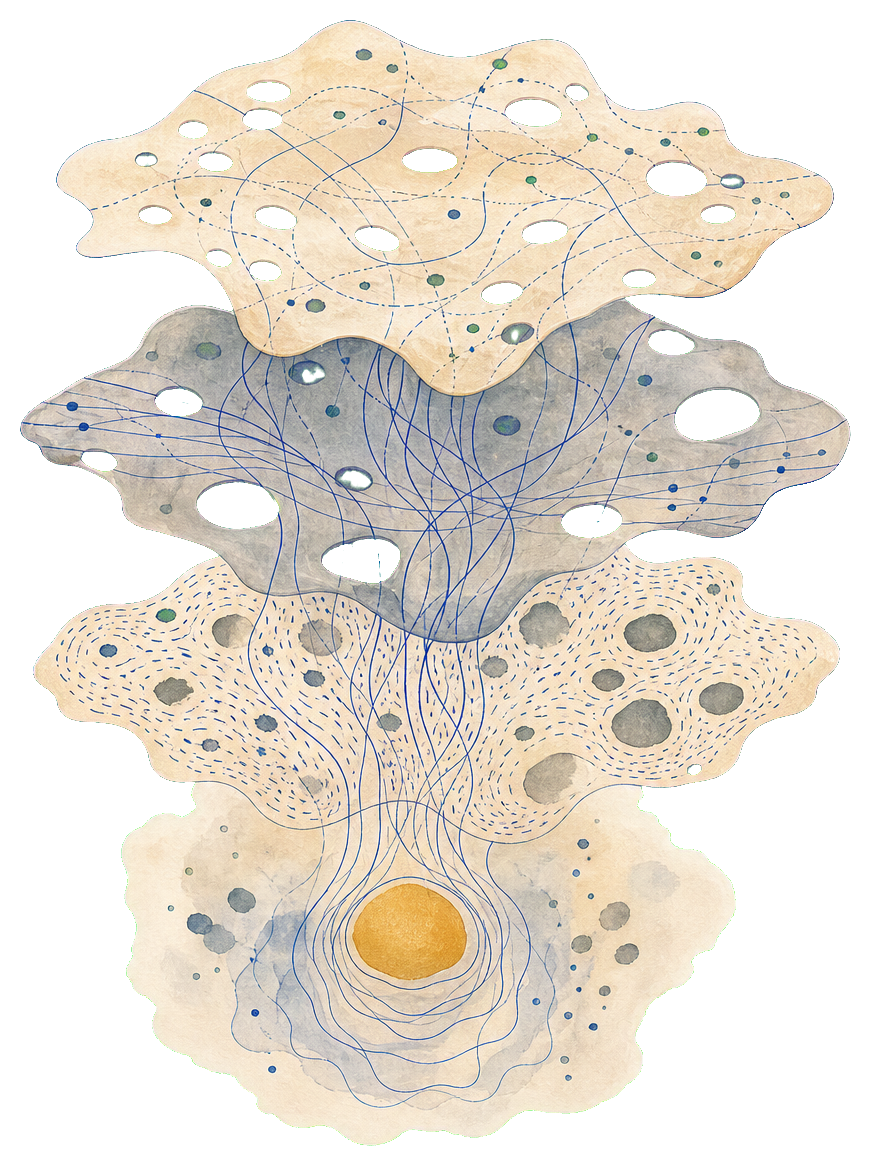
Consider a child praised for being helpful and met with irritation when they have needs. One possible operating rule is: my value is safest when I am easy. The predicted consequence of asking is disapproval or disconnection. The protective response is anticipation: notice needs early, say yes quickly, hide resentment, repair problems before they are named. Repetition can produce a workplace or family arrangement in which others rely on that person without learning their limits. The outcome then appears to confirm the original rule.
Every link may be understandable, and the complete loop may still be costly. The point is not to discover a perfect origin story. The point is to separate the present cue, the prediction, the chosen response, and the result. That separation creates an intervention point.
Similar behaviour, different mechanisms
The same visible behaviour can arise from different conditions. A quiet person may prefer quiet, be conserving energy, be navigating an unsafe room, be thinking carefully, or be unable to speak freely. A diligent person may love precision, be responding to a high-stakes task, or be trying to prevent a predicted loss of status. Helpfulness can be freely chosen generosity, a paid skill, a cultural obligation, or a protective strategy.
The useful distinction is not between “real” and “fake” traits. It is between a response that remains available for revision and a response that feels compulsory, continues after conditions change, and repeatedly produces an outcome the person does not choose.
Three questions make that distinction inspectable:
- Flexibility: can the response change when the context changes?
- Cost: what does the response repeatedly cost in health, relationship, livelihood, time, or chosen work?
- Authorship: can the person describe why they choose it and revise after feedback?
These questions are not a test of moral maturity. Disability, duty, cultural commitments, financial dependence, discrimination, and danger can limit flexibility. A response may remain necessary because the predicted consequence is still real.
From identity verdict to operating sentence
An identity statement is broad: “I am independent,” “I am difficult,” “I am the responsible one,” or “I am bad at relationships.” It can feel explanatory while hiding the conditions that sustain it. An operating sentence is narrower: “When someone is disappointed, I offer more than I can sustain before asking what they need.”
Translate an identity statement in four moves:
- Name one recent event that seems to support the identity.
- Describe the observable cue and response.
- State the consequence the response predicts or manages.
- Write a conditional sentence: “When happens, I tend to because I predict ___.”
For example, “I am bad at relationships” may become: “After conflict, I withdraw before checking whether repair is possible because I predict humiliation or abandonment.” The revised sentence does not deny pain. It turns a global verdict into a claim that can receive evidence.
A case: invisible coordination at work
Mara notices a deadline with no owner during a planning meeting. She could name the gap. Instead she absorbs it: she rewrites the unclear document, calms the teammate at risk of missing it, and repairs the work before anyone with authority sees the problem. Her job description does not include this coordination.
The mechanism can be mapped without reducing Mara to an emotion or a childhood story:
| Element | Current case |
|---|---|
| Condition | Ownership is unclear and a deadline is at risk. |
| Possible learned rule | Value comes from making life easier before anyone asks. |
| Predicted consequence | If I do not intervene, failure, conflict, or blame will follow. |
| Protective response | Anticipate, absorb, repair, and hide the labour. |
| Short-term function | The deadline is protected and immediate uncertainty falls. |
| Long-term cost | Work remains unowned, Mara's workload is invisible, and the organisation learns to depend on her rescue. |
| Test | Record the work, name the ownership gap, and observe whether responsibility is redistributed or punished. |
The analysis allows several outcomes. If the organisation welcomes visibility and distributes the work, the present setting differs from the earlier rule. If a manager punishes the disclosure or continues to rely on invisible labour, the work structure itself is maintaining the pattern. Neither result proves that Mara's usefulness is an identity defect.
An intervention therefore needs more than “stop people-pleasing.” Mara can record invisible tasks for two weeks, distinguish emergencies from unclear ownership, name recurring functions in planning, decline one rescue with enough notice for the responsible person to act, and ask for coordination time to appear in estimates. These actions test both the internal prediction and the organisation's incentives.
The same map transfers. A family peacemaker can name coordination labour. A community volunteer can distinguish service from permanent availability. A friend can offer care without becoming an emergency system. The behaviour changes form; the causal structure may remain.
The difference between a capacity and a compulsion
Some capacities developed under pressure remain valuable. Observation, timing, creative communication, precision, care, and the ability to notice a neglected task can all be retained. Revision asks whether the capacity can be offered under terms the person can name.
My own terms once appeared through three autobiographical symbols: the Child, the Performer, and the Void. They are not stages every reader must pass through. They name three functions in one case: silence reduced exposure in an unpredictable environment; performance created visibility and connection; the collapse of a familiar role created a period in which old agreements could be inspected. The useful question was never which part was “authentic.” It was which capacity to keep, which operating rule to retire, and what material support was required during the change.

Inherited instruction has more than one source
Family is one source of conditioning. Culture, religion, schooling, economic pressure, gender roles, racism, caste, disability access, migration, media, and political systems also shape which responses appear possible. Some instructions are stated directly; others arrive through reward, exclusion, and unequal consequences.
“Be grateful” can be care in one setting and a tool for silencing need in another. “Work hard” can support agency or justify exploitation. “Forgive” can release a private burden or pressure someone back into unsafe contact. Meaning depends on context, power, and outcome.
This is why observation and interpretation must remain separate. A parent frowned is an observation. “My needs disgust them” is an interpretation. The interpretation may be accurate, partly accurate, or mistaken; a child may have had no safe way to check. An adult can sometimes gather more evidence. People living under coercion, poverty, abuse, war, discrimination, or legal constraint cannot simply think their way out of material power. Authorship includes recognising limits, seeking allies, changing conditions where possible, and refusing the claim that every harmful outcome was internally created.
Test one rule, not a whole self
Suppose the rule is “I must answer every message immediately.” The prediction is that delay will make people angry and they will leave. A reversible variation could be waiting thirty minutes before answering a low-stakes message from a generally safe friend. The outcome may confirm, complicate, or weaken the prediction. If the friend does become angry, that does not prove a fixed identity; it supplies information about the relationship, the expectation, or the way the experiment was communicated.
The model cannot identify a forgotten origin from present behaviour alone. It cannot determine why a caregiver acted, sort genes and experience into clean percentages, or guarantee freedom after recognition. Insight competes with habit, resources, loyalty, dependency, and environment. When the predicted cost of change remains high, continued obedience may be information about the current system.
A coordinate for the next decision
There may be no untouched self beneath every influence. A more useful starting point is a coordinate:
I am here. This is what I notice. This is what I currently believe. This is what I can test. This is what remains unknown.
A coordinate does not erase an old rule. It makes the rule observable before it becomes action. The question changes from “Who am I really?” to “What is operating here, what does it cost, and what is one proportionate revision?”
The next chapter examines a related distinction. Once a learned rule is visible, how can a person tell preference, impulse, compulsion, familiarity, and social instruction apart without imagining that any feeling arrives untouched?